 +44 778 999 3596
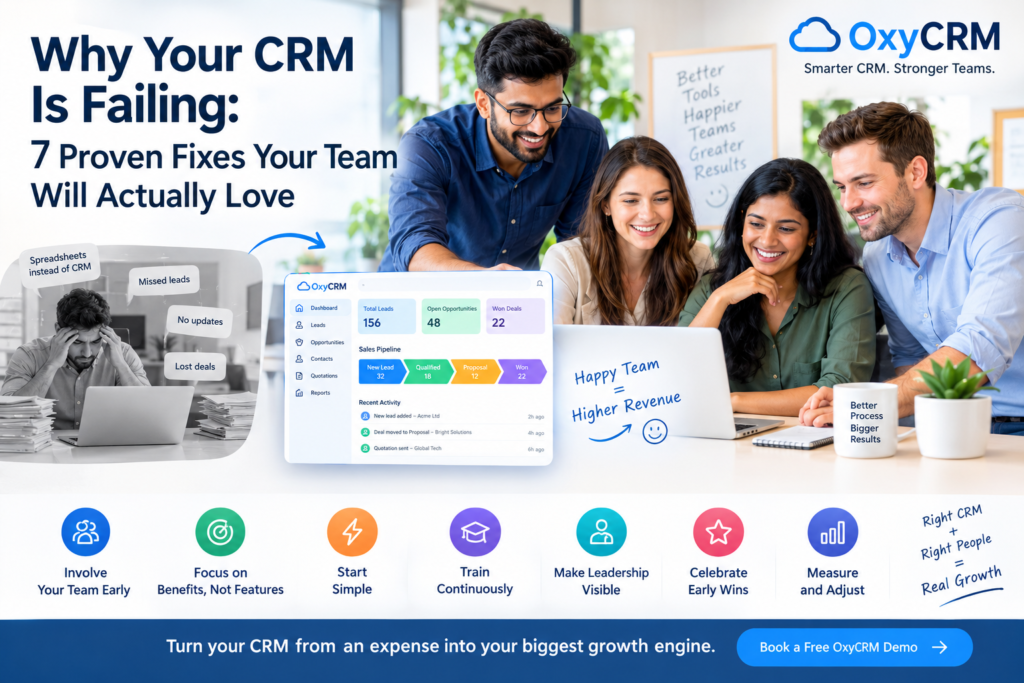
You paid for new CRM software, but nobody on your team opened it. Sound familiar? Many UK businesses go through the same thing, and the cause is rarely the software. In most cases, the people who have to use it were never brought along. This guide explains why CRM projects stall, how to spot the warning signs, and what you can do to turn a neglected system into a real source of revenue.
The Real Cost of a CRM Nobody Uses
Picture a sales director who approves a CRM budget in January. By March, the dashboards are still empty. Pipelines are kept in spreadsheets, updates are chased by email, and promising leads quietly go cold.
The software works. The habit never formed.
The price goes beyond the licence fee. Deals are lost, work is duplicated, and good people become frustrated. The good news is that low adoption can be fixed, and you can start this week.
Why Do Most CRM Projects Fail?
People and processes cause most failures, not technology. Teams push back when a system feels like extra paperwork, when it was never properly explained, or when they had no say in choosing it. Three causes come up again and again:
- No clear reason to use it. Staff see data entry, not benefit.
- A messy process built into the system. The CRM copies existing bad habits instead of fixing them.
- Training that stops after launch day. Week one gets all the attention, and week six gets none.
If you cannot see where time and money leak out of your business, a new CRM will only digitise the confusion.
How to Spot Inefficiencies Before You Choose a CRM
Review how work really flows through your business before you compare software. Start with these five questions:
- Where are leads and enquiries delayed or forgotten?
- Which tasks are repeated by hand every week?
- How many tools store the same customer details?
- Which approvals or hand-offs slow things down?
- What do customers complain about most?
Write down the answers. They become your shopping list and your measure of success. Simplify the process first, then automate it. Automating a broken process only produces mistakes faster.
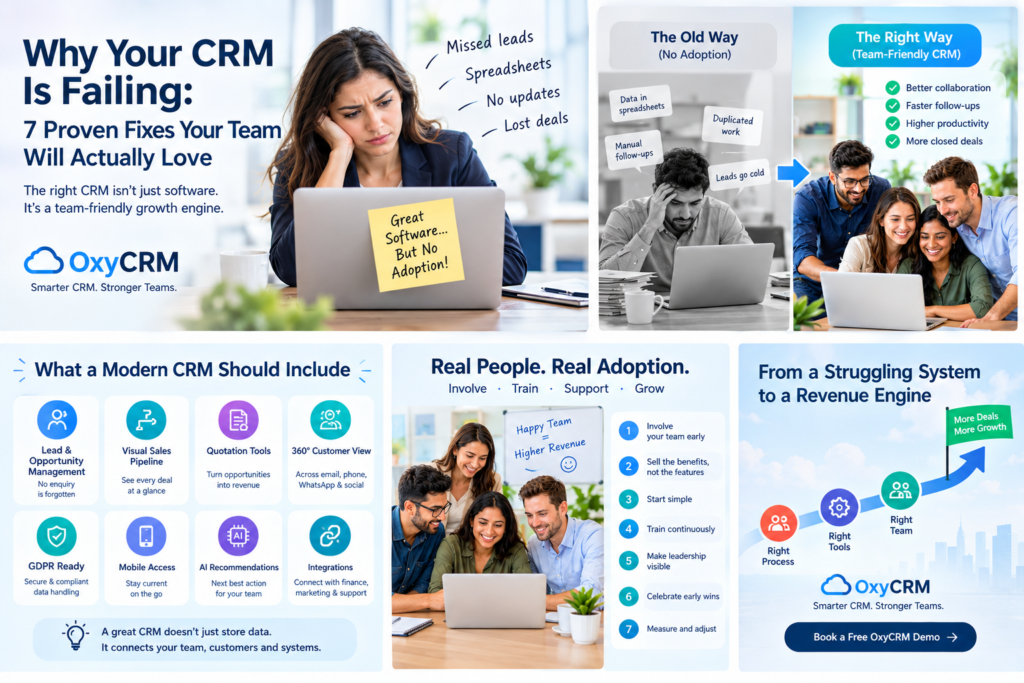
7 Proven Ways to Make Your Team Love Their New CRM
1. Involve your team early
Ask people from sales, service and admin to help choose the system. Staff support what they help build, and they often spot practical needs that managers miss.
2. Sell the benefits, not the features
Show reps what is in it for them: less admin, faster quotes and clearer priorities. A tool that helps someone hit their target gets opened every morning.
3. Start simple
Launch with the basics: leads, contacts, pipeline and quotations. More can be added later. A system that feels crowded on day one is quickly abandoned.
4. Keep training going
A single workshop is never enough. Short refresher sessions, quick guides and a named internal champion keep skills fresh.
5. Make leadership visible
When managers run weekly meetings straight from the CRM dashboard, the team follows. If updates are still accepted by email, the system loses its authority.
6. Celebrate early wins
Share the first deal tracked from enquiry to close, or the stalled opportunity that an alert rescued. Small stories build momentum.
7. Measure and adjust
Track logins, record completeness and pipeline accuracy. Review them monthly, and adjust your setup based on what the numbers show.
What Should a Modern CRM Include?
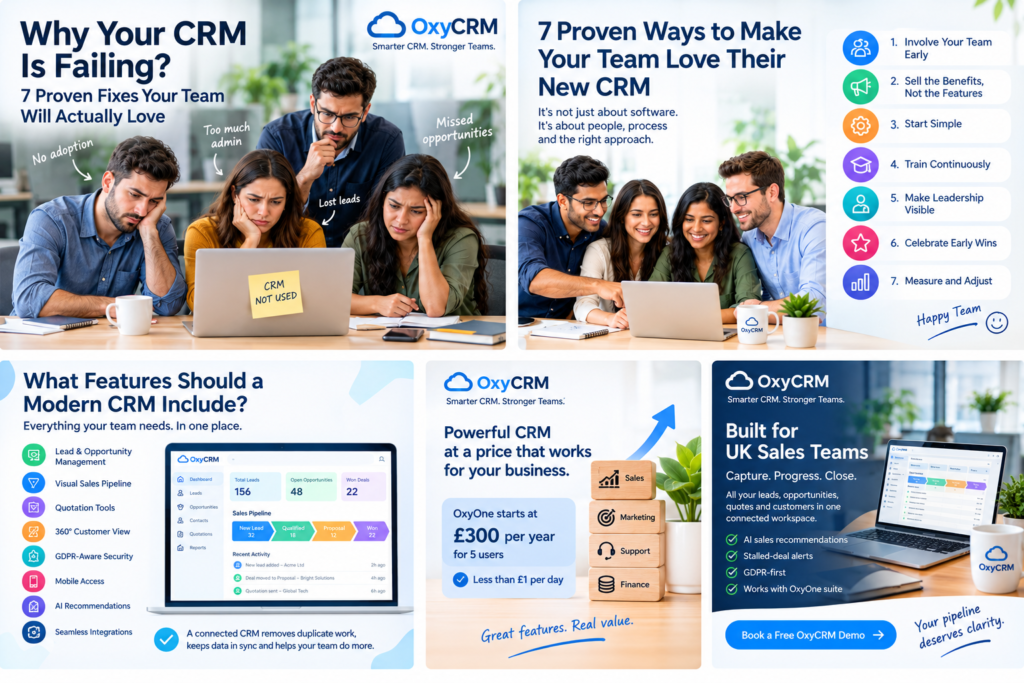
Buyers ask this question more than any other, so here is a practical checklist for UK small and medium-sized businesses:
- Lead and opportunity management, so no enquiry is forgotten (see Lead Management and Opportunity Management)
- A visual sales pipeline that shows every deal at a glance (see Sales Pipeline)
- Quotation tools linked to the deal record (see Quotations)
- A 360° customer view across email, phone, WhatsApp and social channels (see Contact Management)
- GDPR-aware data handling and role-based access
- Mobile access, so field teams always see current information
- AI recommendations that suggest the next best action
- Integrations with finance, marketing and support, so data never has to be typed twice
How Much Does CRM Software Cost?
A capable CRM does not need an enterprise budget. OxyOne plans start at £300 per year for 5 users, which is less than £1 per day. When you compare options, look at the total cost, including training, setup and support, and not only the licence price.
Meet OxyCRM: Built for UK Sales Teams
If you want a system designed around these ideas, take a look at OxyCRM. It keeps leads, opportunities, quotations and your pipeline in one connected workspace, and it follows a simple three-step flow:
- Capture leads from web forms, email, WhatsApp and social channels.
- Progress each opportunity through a clear, visual pipeline.
- Close with professional quotations, then pass won deals to billing.
AI sales recommendations point reps toward the next best step, and stalled-deal alerts keep opportunities moving. Because OxyCRM belongs to the wider OxyOne suite, it shares one database with other modules. Won deals can flow straight into OxyFinance for invoicing. Leads can be fed by targeted campaigns in OxyCampaign. Customers can be looked after after the sale in OxyDesk. Conversations stay in one place with the Unified Email Inbox and WhatsApp Business, and results are tracked in Dashboards & Analytics.
Data handling is GDPR-first, so your compliance questions are covered from the start. A free demo lets your team test the system before you commit, which also supports the “involve your people early” tip above.
Your 30-Day Action Plan
Do not let this article sit in your bookmarks. Here is a simple month:
- Week 1: Review your processes and list five inefficiencies.
- Week 2: Collect team feedback and agree on three success measures.
- Week 3: Shortlist platforms and book demos.
- Week 4: Run a small pilot and appoint a CRM champion.
Every month of delay means more leads slipping through the gaps.
Frequently Asked Questions
What is a CRM and why does my business need one?
A CRM (customer relationship management) system stores every lead, contact, deal and conversation in one place. It helps your team follow up on time, forecast sales more accurately and give customers a consistent experience.
Why is my team not using the new CRM?
The usual reasons are unclear benefits, too much complexity, little training and no visible support from managers. Involving staff early and starting with a simple setup fixes most of these.
How long does CRM adoption take?
Most teams need several weeks to build the habit. Plan for a pilot in the first month, then review usage monthly and keep training going.
How much does a CRM cost for a small UK business?
Prices vary widely. OxyOne starts at £300 per year for 5 users. Always add setup, training and support to your comparison.
Is OxyCRM GDPR compliant?
Yes. OxyOne is built for UK businesses with GDPR-first data governance and role-based access.
Can OxyCRM work with my finance and marketing tools?
Yes. OxyCRM is part of the OxyOne suite and shares one database with modules such as OxyFinance, OxyCampaign and OxyDesk.
What features should I look for in a CRM?
Look for lead and opportunity management, a visual pipeline, quotations, a 360° customer view, GDPR-aware security, mobile access, AI recommendations and integrations.
Can I try OxyCRM before buying?
Yes. You can book a free demo or start a free trial and let your team test it first.
Conclusion
A CRM delivers value only when people use it. Find your inefficiencies, simplify your processes, bring your team into the decision, and choose a system that makes daily work easier instead of harder. Do this, and your CRM stops being a cost and becomes the tool your team trusts most.
Discover how OxyCRM can streamline your sales process and strengthen team adoption. Book a free demo today, or contact us to discuss your requirements. For regular insights and product updates, follow us on X, Instagram, Pinterest and Quora. More guides are available on our blog.